GenesisX
GenesisX is an AI storytelling platform for consumer-goods and retail brands. Its team produces mobile experiences — full-screen, swipeable, scene-by-scene sites — for brands such as Coca-Cola, Häagen-Dazs, Oreo and Starbucks. I led development of the internal tool those are made in: a visual editor where a campaign is composed as a set of scenes, wired together by gestures, and published without a developer in the loop.
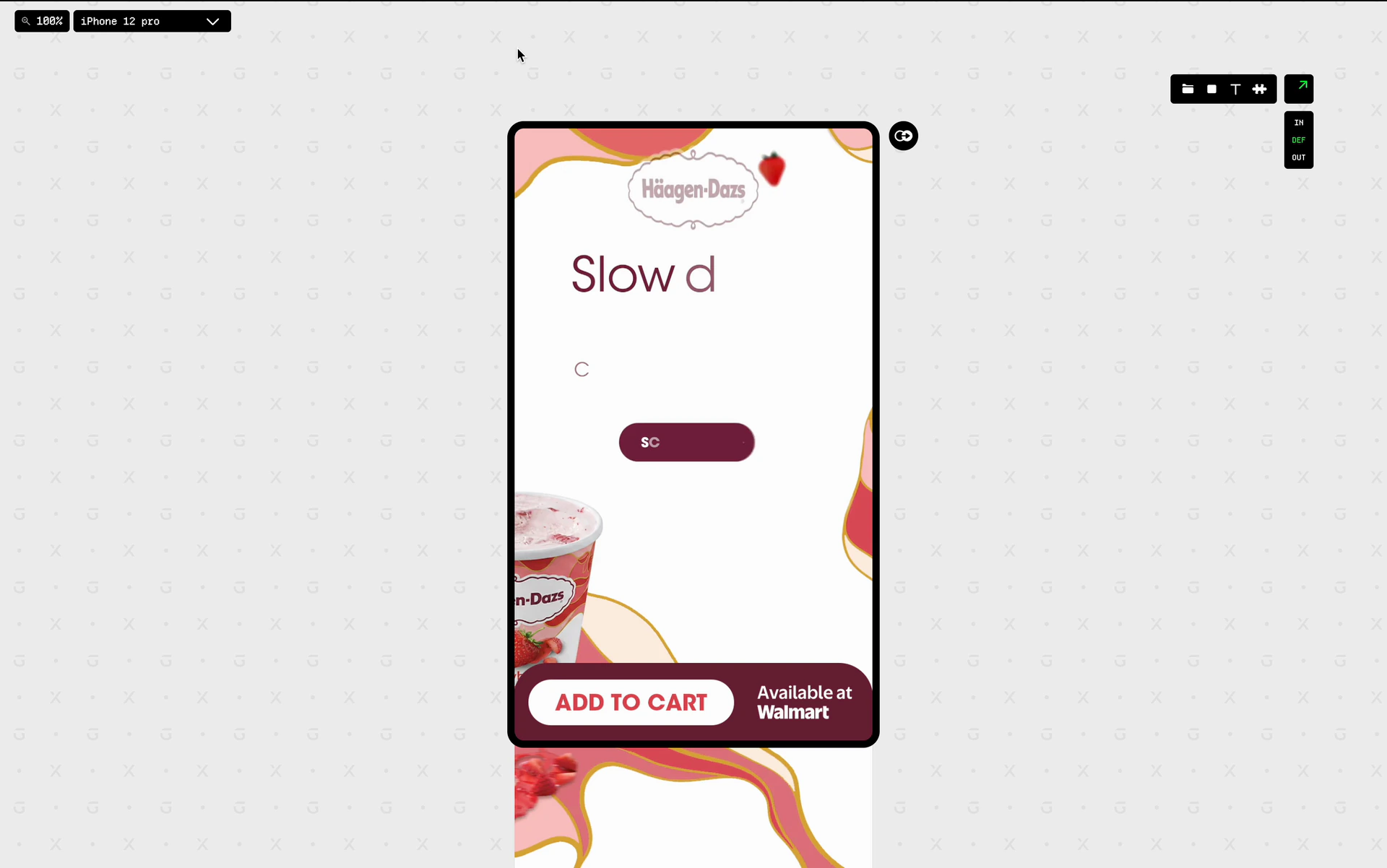
Scenes, not pages
A GenesisX project is not a scrolling page but a set of full-screen scenes, designed against real device frames. A scene is built from layers — images, GIFs, video, rich text, embeds, custom code — and every layer carries three states: in, default and out. A scene can therefore assemble itself on arrival and clear itself on exit, without the designer scripting anything.
Wiring scenes together
The scenes map
Once a campaign has a dozen scenes linked in four directions, a list stops being enough. The scenes map lays the whole project out as a node graph, built on React Flow: every scene is a node showing a live preview of itself, swipe relations and tap links are drawn as differently coloured edges, and each edge leaves its node from the side that matches its direction — so the map reads the way the experience moves.
A state machine that follows the finger
On a phone, a transition is not an animation that plays — it is something the user drags. The runtime models that explicitly, as an XState machine: active, preparing, transitioning, then committed or cancelled.
Publishing, export and AI
Architecture
The platform is a TypeScript monorepo: the editor, the API, a public read API, the export service, and a shared domain package whose types and zod schemas are used on both sides of the wire.